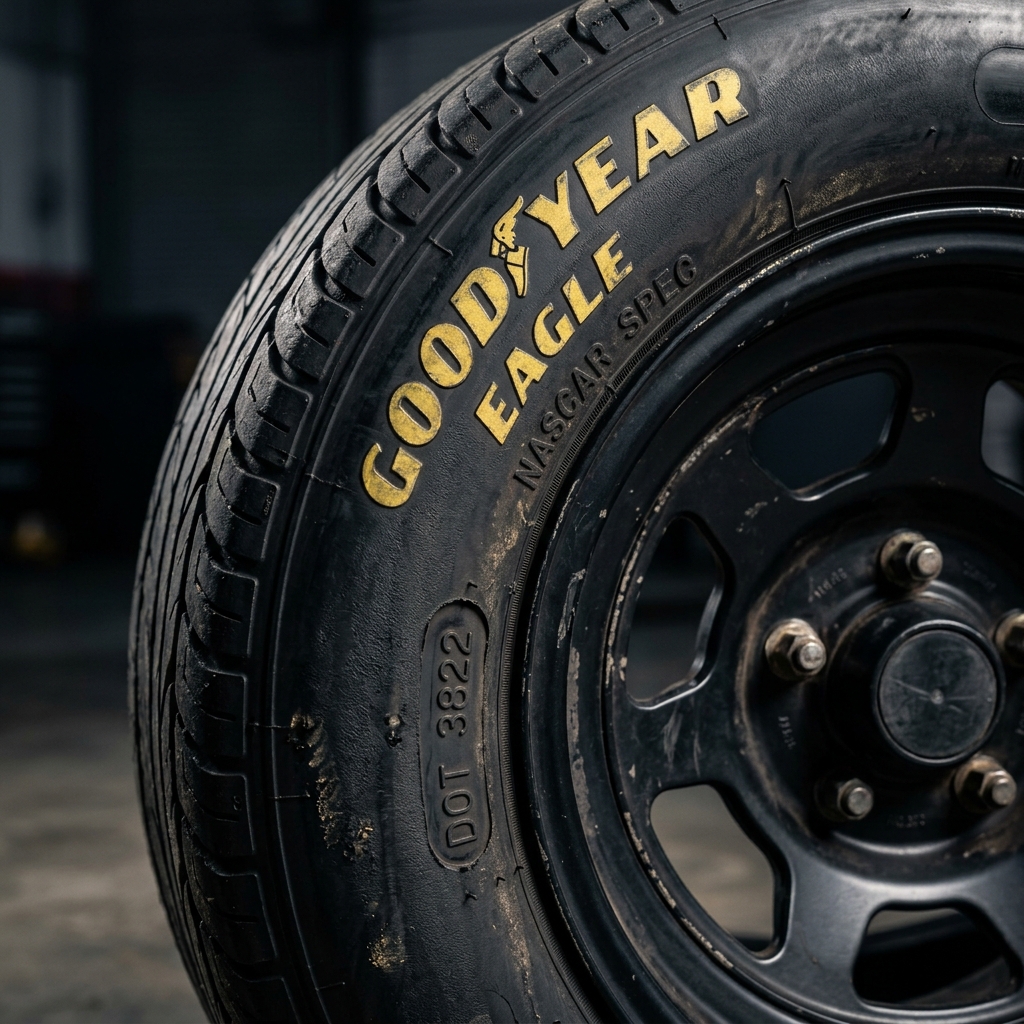
The Physics of Vulcanization Aging & Polymer Oxidation
Structural sulfur cross-linking, plasticizer evaporation, and why 6-year-old tires suffer up to 35% longer wet braking distances.
Beyond tread depth lies chemical compound degradation. Enter your 4-digit US DOT serial to compute real-time rubber vulcanization age and NHTSA factory safety index.
DIGITS 1-2: WEEK (01-52) β’ DIGITS 3-4: YEAR (e.g. 22 = 2022)
Compute recommended cold inflation pressure in PSI, Bar, or kPa based on exact tire width, aspect ratio, rim size, load, and ambient season.
Compare stock vs target tire sizes. Calculate diameter deltas, sidewall height, revolutions per mile, and speedometer calibration error.

Oval Capsule: Hot-stamped inside an indented oval mold on the lower sidewall.
β’ First 2 Digits (38): Manufactured in Week 38 (Mid-September).
β’ Last 2 Digits (22): Manufactured in Year 2022.
Factory Origin: Identifies the exact manufacturing plant location and mold batch registered with NHTSA.
Dimension Specs: Section width (225mm), aspect ratio (45%), radial construction (R17 rim), load index (94 = 670kg), speed symbol (W = 168 mph).
Updated August 2026 β’ NHTSA & ISO Verified Data
Structural sulfur cross-linking, plasticizer evaporation, and why 6-year-old tires suffer up to 35% longer wet braking distances.
Sunlight heat inside trunk enclosures activates Arrhenius oxidation. Why a pristine 6-year spare is a ticking blowout hazard.
Complete breakdown of plant codes, mold identifiers, and 4-digit date capsules under 49 CFR Β§ 574.5 standard.
How high ambient temperatures, UV radiation, and ground ozone accelerate rubber compound hardening up to 2.4x faster.
Vehicle inspection limits (1.6mm tread depth) vs comparative negligence claims in traffic accidents caused by aged rubber.
Cold weather glass transition temperature (Tg) shifts and silica compound hardening causing severe ice traction failure.
Essential facts regarding US DOT serial codes, tire pressure standards, and highway safety limits.
A tire DOT code is a standardized 4-digit serial stamped on the sidewall mandated by the US Department of Transportation. The first two digits represent the week of manufacture (01 to 52), while the last two digits represent the calendar year (e.g. "3822" = 38th week of 2022).
Cold tire pressure varies by vehicle weight and axle load. US vehicles specify PSI (typically 32β38 PSI for sedans and SUVs), while European vehicles use Bar (2.2β2.6 Bar) or kPa (220β260 kPa). Cold pressure should always be checked in the morning before driving.
Changing tire width, aspect ratio, or rim size alters the overall rolling diameter and circumference. If overall diameter differs by more than Β±3% from original OEM specs under ETRTO guidelines, speedometer readings will be inaccurate and ABS/traction control systems may trigger fault codes.
Major automotive manufacturers and safety authorities (NHTSA, Michelin, Goodyear) recommend replacing tires once they reach 6 years of age, and mandate replacement at 10 years regardless of remaining tread depth, due to rubber compound oxidation.